


The Role of Diaphragm Pump Safety Valve: Ensuring System Stability
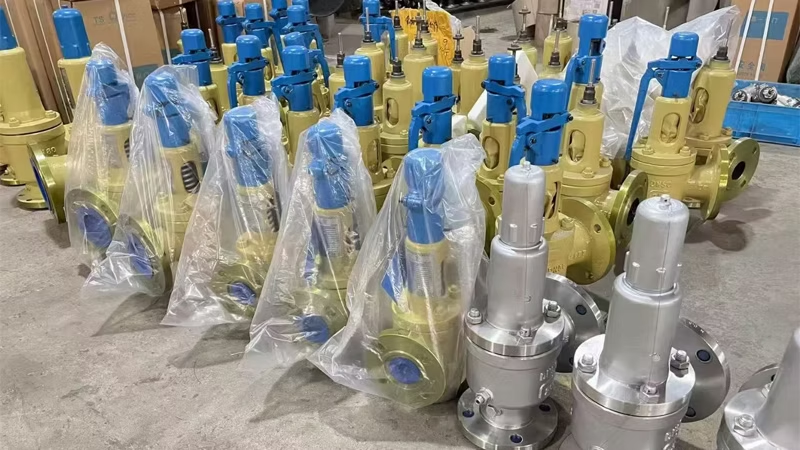
This article systematically discusses the core functions, operating principles, selection criteria, and maintenance practices of safety valves for diaphragm pumps. As a critical overpressure protection device, the safety valve automatically opens to release excess pressure, effectively preventing equipment damage such as diaphragm rupture and pipe bursts, mitigating water hammer effects, and ensuring process stability as well as personnel and environmental safety. The article analyzes major valve types, such as spring-loaded and weight-loaded models, and emphasizes that selection requires comprehensive consideration of set pressure, flow capacity, material compatibility, and medium characteristics. Furthermore, by introducing typical application scenarios and combining installation and maintenance guidelines with troubleshooting procedures—supplemented by actual retrofit case studies—the article demonstrates the significant value of properly configuring and maintaining safety valves in enhancing system reliability, extending equipment lifespan, and reducing overall operational and maintenance costs.