
Welcome to the Official Website of Bolaikong Technology (Wuxi) Co., Ltd.

The Role of Diaphragm Pump Safety Valve: Ensuring System Stability

The Role of Diaphragm Pump Safety Valve: Ensuring System Stability

This article systematically discusses the core functions, operating principles, selection criteria, and maintenance practices of safety valves for diaphragm pumps. As a critical overpressure protection device, the safety valve automatically opens to release excess pressure, effectively preventing equipment damage such as diaphragm rupture and pipe bursts, mitigating water hammer effects, and ensuring process stability as well as personnel and environmental safety. The article analyzes major valve types, such as spring-loaded and weight-loaded models, and emphasizes that selection requires comprehensive consideration of set pressure, flow capacity, material compatibility, and medium characteristics. Furthermore, by introducing typical application scenarios and combining installation and maintenance guidelines with troubleshooting procedures—supplemented by actual retrofit case studies—the article demonstrates the significant value of properly configuring and maintaining safety valves in enhancing system reliability, extending equipment lifespan, and reducing overall operational and maintenance costs.
What to Do If Your Electric Ball Valve Keeps Making Noise? Quick Troubleshooting Tips and Long-Term Solutions

What to Do If Your Electric Ball Valve Keeps Making Noise? Quick Troubleshooting Tips and Long-Term Solutions

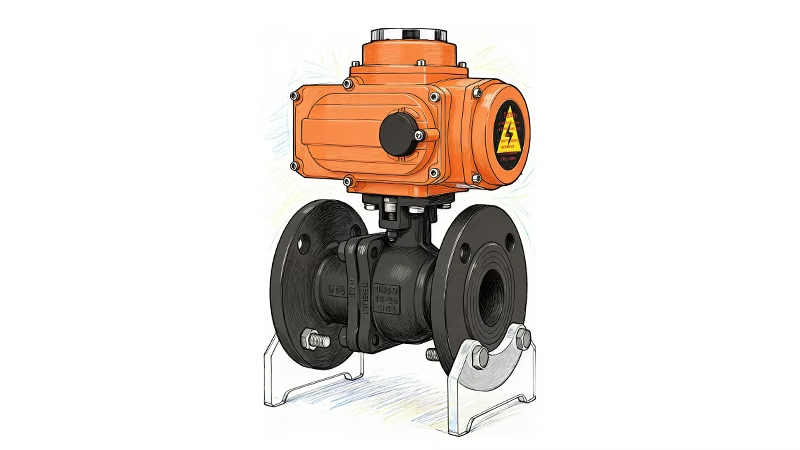
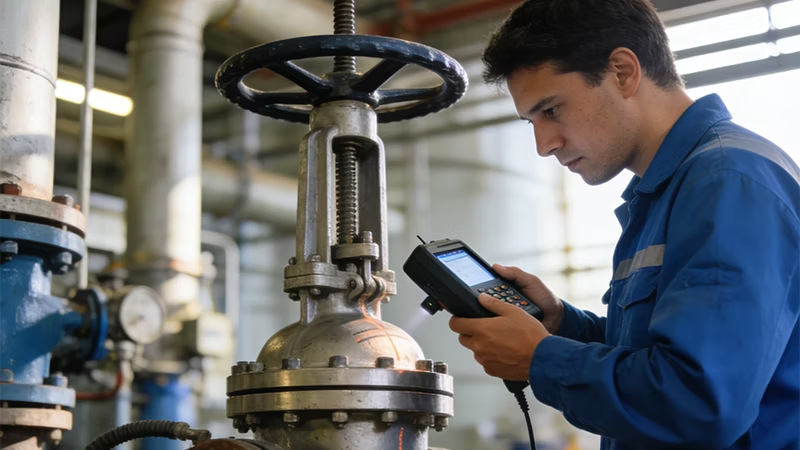
This article systematically outlines the diagnostic process and long-term management strategies for abnormal noise in electric ball valves. Regarding diagnosis, it proposes a five-step troubleshooting method: “auscultation and localization → power-off inspection → installation and alignment → lubrication and sealing → electrical troubleshooting,” emphasizing the combination of sound characteristics, manual testing, and instrument-based detection to ensure accurate diagnosis. For long-term management, the paper recommends establishing a regular maintenance schedule, optimizing spare parts management, promoting technological upgrades, and strengthening staff training to build a preventive maintenance system. The paper aims to help users transition from reactive repairs to proactive management, thereby thoroughly resolving noise issues in electric ball valves.

Choosing a Third-Party Valve Testing Organization: The Best Way to Ensure Safety and Quality

Choosing a Third-Party Valve Testing Organization: The Best Way to Ensure Safety and Quality

As a critical component of industrial equipment, valves play a vital role in various production and transportation processes. Selecting a professional third-party valve testing organization is an effective way to ensure the quality, safety, and reliability of valves. This article will explore in depth the importance of third-party valve testing organizations and how to choose the right testing services to help businesses improve product quality and competitiveness.

Understanding Copper Ball Valve Models, Specifications, and Sizes: Selecting the Right Copper Ball Valve to Ensure Safe and Efficient Projects

Understanding Copper Ball Valve Models, Specifications, and Sizes: Selecting the Right Copper Ball Valve to Ensure Safe and Efficient Projects

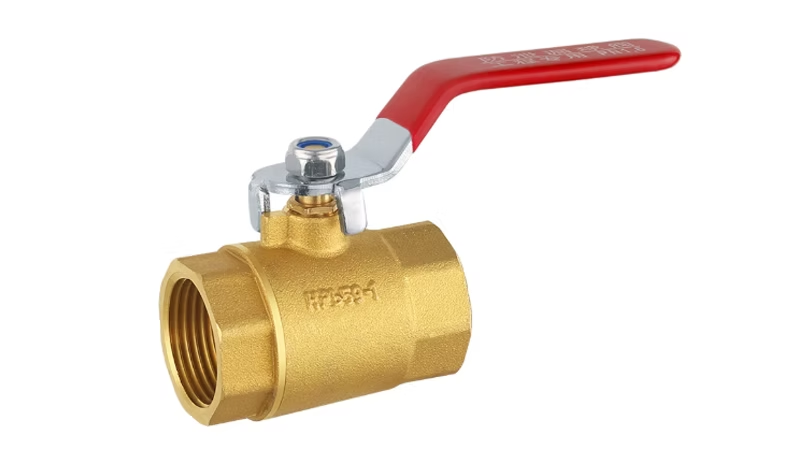
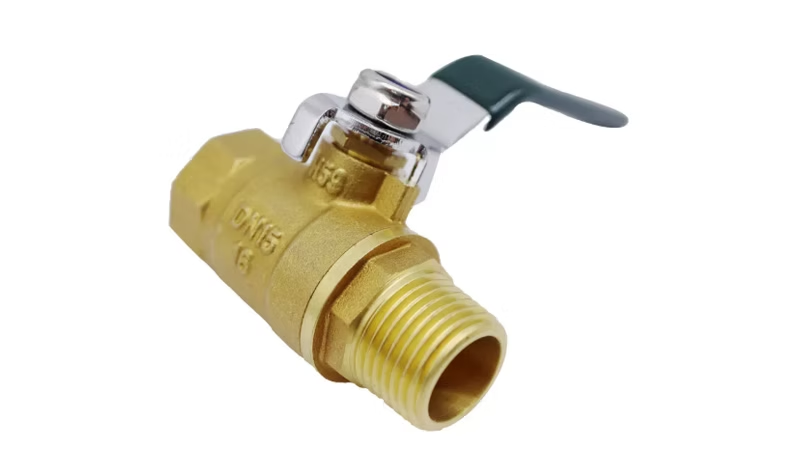
As an important control component commonly used in piping systems, brass ball valves are widely applied in water supply, heating, and gas systems. Understanding the models, specifications, dimensions, and selection criteria of brass ball valves helps users identify the most suitable product from a wide range of options, thereby enhancing the safety and efficiency of their projects.

Types of Valves in Municipal Water Supply Systems

Types of Valves in Municipal Water Supply Systems

Detailed Explanation of Valves, Core Components of Municipal Water Supply Systems: Hydraulic control valves regulate water flow direction, flow rate, and pressure to ensure system stability; globe valves are used to shut off water flow, facilitating maintenance and emergency response; anti-contamination valves strictly prevent the intrusion of contaminants to ensure water quality safety; while relief valves and pressure-reducing valves control water levels and reduce water pressure, respectively, to prevent equipment damage. This article outlines the functions and importance of these key valves, emphasizing that their proper selection and management are indispensable for ensuring the safe and stable operation of water supply systems.

Advantages of Cast Steel Butterfly Valve Over Cast Iron Butterfly Valve

Advantages of Cast Steel Butterfly Valve Over Cast Iron Butterfly Valve

This article provides a comparative analysis of the key differences between cast steel butterfly valves and cast iron butterfly valves. Cast steel butterfly valves, made from high-strength carbon steel, offer significant advantages in terms of corrosion resistance, high-temperature and high-pressure performance, service life, and maintenance costs, making them particularly suitable for harsh operating conditions. Cast iron butterfly valves, while lower in cost, have inferior strength and corrosion resistance and are more suitable for water systems operating at normal temperatures and pressures. Engineering selection must be based on specific operating conditions, balancing performance and cost to ensure the safe and stable operation of the system.

Differences Between PTFE and EPDM Sealing Materials in Butterfly Valve

Differences Between PTFE and EPDM Sealing Materials in Butterfly Valve

This article compares the performance differences and application scenarios of two key sealing materials used in butterfly valves: PTFE (polytetrafluoroethylene) and EPDM (ethylene propylene diene monomer). PTFE is renowned for its exceptional chemical stability, corrosion resistance (resistance to acids, alkalis, and solvents), and low coefficient of friction, and is widely used in the chemical, petroleum, and pharmaceutical industries; however, it has relatively low mechanical strength and requires caution when used at high temperatures. EPDM, on the other hand, offers excellent weather resistance (resistance to aging, ozone, high temperatures, and moisture) and insulation properties, making it particularly suitable for outdoor piping, waterproofing, and electrical applications; however, its chemical stability is relatively weaker than that of PTFE. When selecting a material, the characteristics of both must be weighed against specific operating conditions (fluid properties and environmental conditions) to optimize the performance and service life of the butterfly valve.

The Difference Between Wafer-Type and Flanged Butterfly Valve

The Difference Between Wafer-Type and Flanged Butterfly Valve

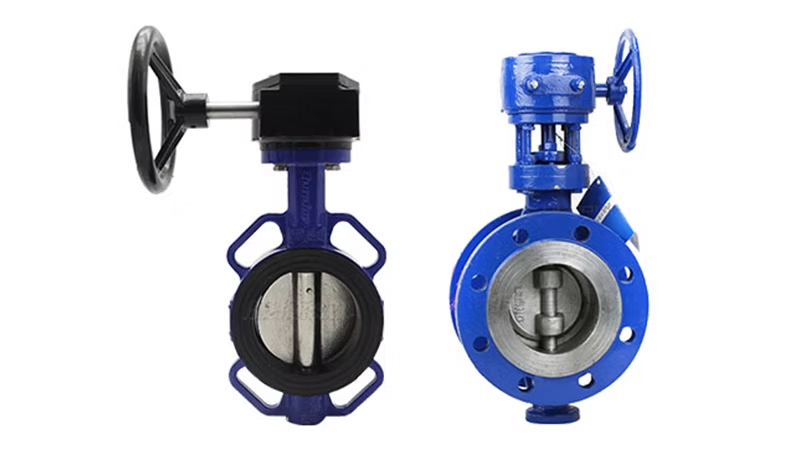
This article systematically analyzes the key differences between wafer-type butterfly valves and flanged butterfly valves. Wafer-type butterfly valves feature a lightweight and simple design; they are installed by clamping between pipe flanges, making them easy to install and remove. They are suitable for applications with limited space or those requiring frequent maintenance (such as ventilation and water treatment systems); Flange-mounted butterfly valves, on the other hand, utilize pre-fabricated flanges for a secure connection, offering superior sealing performance and exceptional high-pressure resistance, making them suitable for demanding industries such as petrochemicals and power generation. Each type has distinct strengths in terms of sealing performance, maintenance costs, and application scenarios, providing a critical reference for selecting industrial fluid control valves.

An Analysis of the Applications and Advantages of Soft-Seal Gate Valve

An Analysis of the Applications and Advantages of Soft-Seal Gate Valve

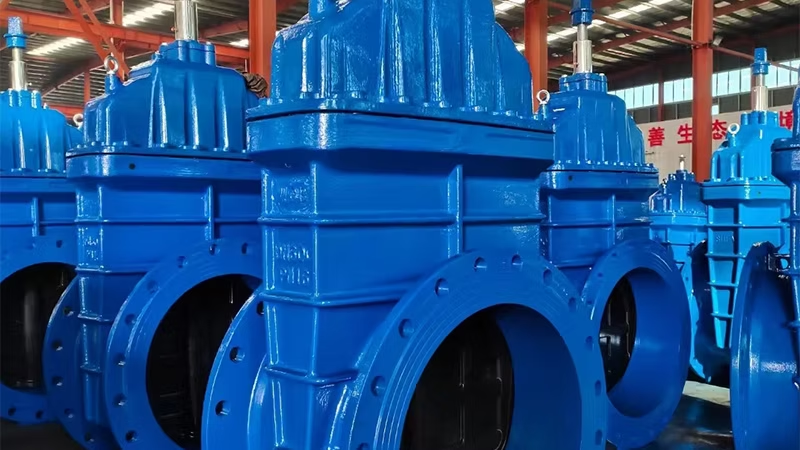
This article provides a detailed overview of the core advantages and practical value of soft-seal gate valves. Their exceptional elastic sealing performance effectively prevents leaks, reduces energy consumption, and minimizes safety risks; their simple design, easy operation, and long maintenance intervals significantly reduce maintenance costs and downtime; and their excellent corrosion and wear resistance, combined with a long service life, make them suitable for harsh operating conditions and capable of substantially lowering operational costs for businesses. Soft-seal gate valves are essential equipment for enhancing the efficiency and safety of industrial piping systems.

Applications of Hard-Seal Butterfly Valve

Applications of Hard-Seal Butterfly Valve

Thanks to their simple structure, ease of operation, and excellent sealing performance, hard-seal butterfly valves have become essential fluid control equipment in harsh environments involving high temperatures, high pressures, and corrosive media. This article focuses on their widespread application in industrial sectors such as chemicals (precision control, corrosion resistance), oil and gas (high-pressure, high-temperature transportation and processing), as well as power generation, metallurgy, and papermaking (regulating media such as water, steam, gas, and pulp). These valves meet stringent requirements for stability and reliability, effectively enhancing production efficiency and safety.

Are Butterfly Valve or Gate Valve Suitable for Water Supply Pipes?

Are Butterfly Valve or Gate Valve Suitable for Water Supply Pipes?

In water supply pipeline systems, both butterfly valves and gate valves have their respective advantages: butterfly valves are easy to operate and cost-effective, making them suitable for flow regulation and frequent opening and closing; gate valves offer superior sealing performance and high reliability, but they require more effort to operate and are more expensive. When making a selection, one should consider flow control requirements, operating frequency, budget, and long-term maintenance costs comprehensively.

The Function of a Y-Strainer in a Pipeline

The Function of a Y-Strainer in a Pipeline

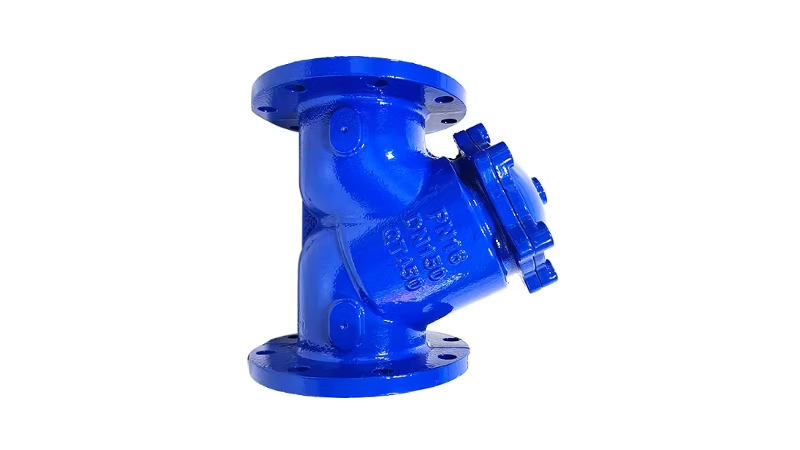
With its unique Y-shaped design, the Y-strainer efficiently filters out impurities and solid particles from fluids, protecting piping equipment from damage, significantly improving system efficiency and stability, and offering the advantage of easy cleaning and maintenance. It is an indispensable piece of equipment in industrial and commercial piping systems.

The Specific Function of a Check Valve

The Specific Function of a Check Valve

Check valves are critical components in piping systems that prevent backflow of fluids, playing a vital role in ensuring the safe and stable operation of the system. Their primary functions include: effectively preventing reverse flow of fluids, significantly reducing pressure loss in pipelines, protecting equipment from damage caused by pressure fluctuations, and contributing to energy conservation and emissions reduction. The proper use of check valves can enhance system efficiency, safety, and economic and environmental benefits.

Common Types of Valves Used in Water Supply Systems

Common Types of Valves Used in Water Supply Systems

This article analyzes the five core valve types in water supply systems and their applications: ball valves (reliable sealing, fast opening and closing, suitable for shutting off small and medium-sized pipes); butterfly valves (lightweight and easy to operate, primarily used for regulating high flow rates); gate valves (durable, full-bore design, used for opening and closing main pipelines); check valves (prevent backflow of media, ensuring pump safety); and control valves (precise flow and pressure control, suitable for precision water supply scenarios). Proper valve selection can enhance system efficiency and water supply safety.

What Are the Common Types of Drain Valve

What Are the Common Types of Drain Valve

This article reviews common types of drainage valves and their applications: gate valves (low flow resistance, suitable for high-flow wastewater containing solids); butterfly valves (compact and lightweight, fast operation, suitable for wastewater treatment); ball valves (excellent sealing, low flow resistance, suitable for viscous or crystallizing media); check valves (prevent backflow, ensure pipeline safety); control valves (precise control of flow rate and pressure, used for complex wastewater). Valve selection requires a comprehensive evaluation of fluid characteristics (temperature, pressure, chemical composition, and solid particles), pipeline dimensions, and operational maintenance to enhance drainage efficiency and environmental safety.

What Is the Maximum Temperature That a Butterfly Valve Can Withstand

What Is the Maximum Temperature That a Butterfly Valve Can Withstand

This article analyzes the high-temperature resistance limits of butterfly valves and the key factors that influence them. Temperature resistance depends on material, manufacturing process, and sealing structure:
EPDM rubber seals: -20°C to 120°C
Nitrile rubber seals: 0°C to 80°C
PTFE seals: 0°C to 150°C
Stainless steel seals: -29°C to 425°C (best temperature resistance)
Actual selection must take into account operating conditions such as fluid type, pressure, and temperature fluctuations to ensure stable operation in high-temperature environments.

What Is the Price Difference between Soft-Seal and Hard-Seal Butterfly Valve

What Is the Price Difference between Soft-Seal and Hard-Seal Butterfly Valve

This article analyzes the price differences and key distinctions between soft-seal and hard-seal butterfly valves. Hard-seal butterfly valves are typically more expensive than soft-seal ones; for sizes below DN300, the price difference is approximately 100–900 yuan (depending on the model). Key differences include: soft-seal (rubber/polyurethane material, offering excellent sealing performance but a short service life, suitable for conventional media such as water and air); and hard-seal (metal material, resistant to high temperatures and pressures with a long service life, suitable for harsh environments such as chemical and petroleum industries). Selection must be based on engineering requirements and media characteristics to ensure system safety and efficiency.

Selection of Materials for Valves Used in Industrial Wastewater Treatment

Selection of Materials for Valves Used in Industrial Wastewater Treatment

This article analyzes key considerations for selecting valve materials in industrial wastewater treatment, emphasizing the stringent demands placed on valve performance by corrosive components, chemical agents, and solid impurities in wastewater. Core materials include: stainless steel (high corrosion resistance and excellent mechanical properties, suitable for acidic and alkaline wastewater, such as butterfly valves and gate valves); fluoroplastics (such as fluorinated-lined valves, which offer superior corrosion resistance, are lightweight and cost-effective, and are suitable for complex wastewater environments). Selection must comprehensively consider wastewater composition, operating conditions, and cost-effectiveness to ensure efficient and stable system operation and support environmental protection goals.

WhatsApp
WeChat
WeChat
WeChat
Message

Contact us for personalized service!