
Welcome to the Official Website of Bolaikong Technology (Wuxi) Co., Ltd.

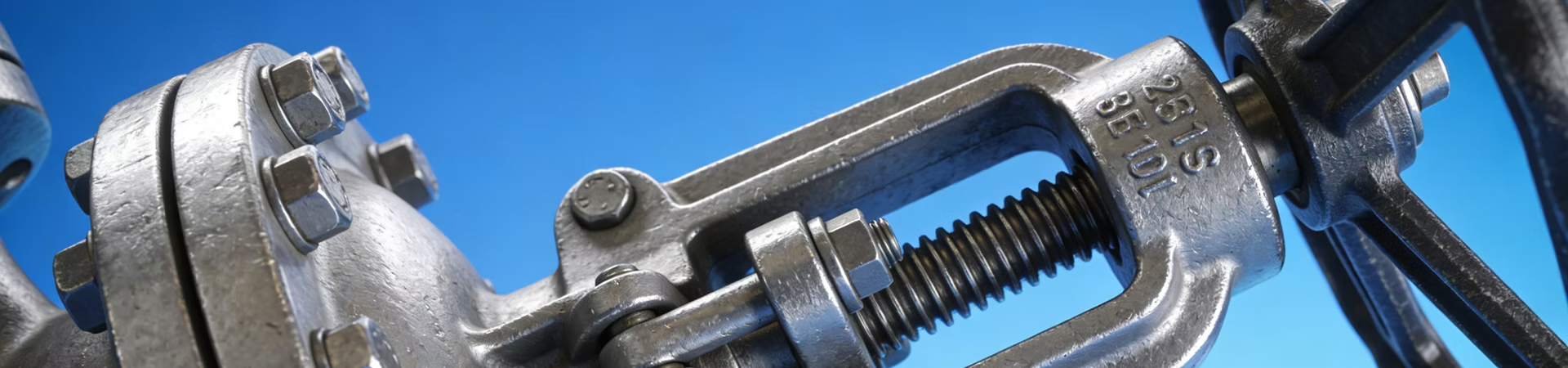
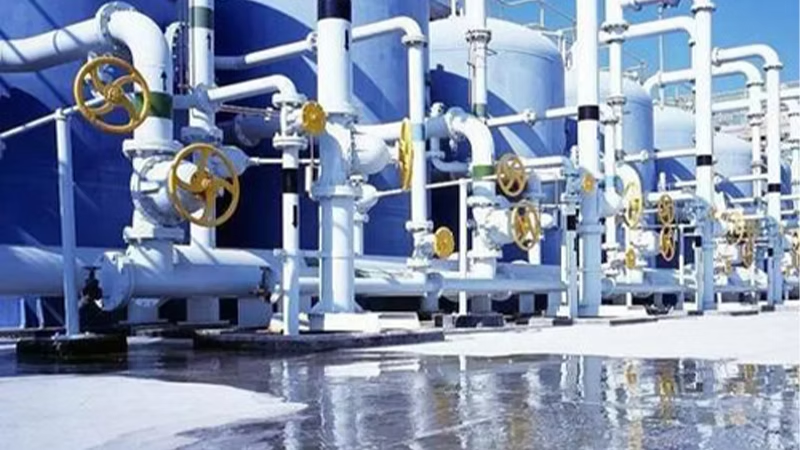
Material Selection for Seawater Valve

Material Selection for Seawater Valve

This article discusses the selection of valve materials for seawater environments, emphasizing the critical impact of seawater’s highly corrosive nature—including chloride ions, salts, and microorganisms—on equipment safety and process efficiency. Key materials include: stainless steel (such as 316L, which offers high corrosion resistance and mechanical strength, making it suitable for seawater treatment and marine engineering); copper alloys (corrosion-resistant and antibacterial, suitable for desalination and marine vessels); and plastics (lightweight and low-cost, but with low strength, suitable for low-pressure, small-bore valves). When making a selection, it is necessary to comprehensively consider seawater composition, process requirements, and operating environments to ensure stable equipment operation.
Common Types of Valves Used in Heating Pipes

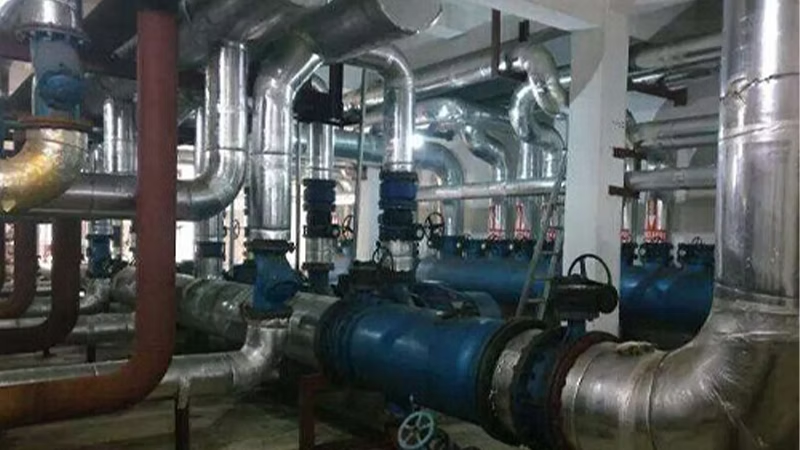
Common Types of Valves Used in Heating Pipes

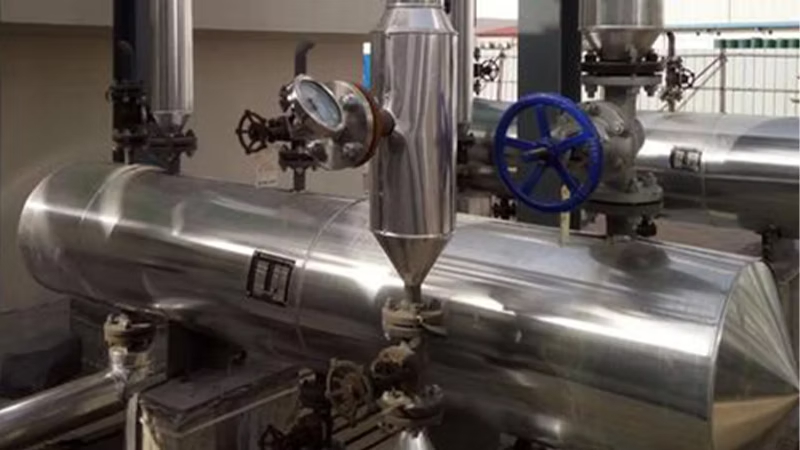
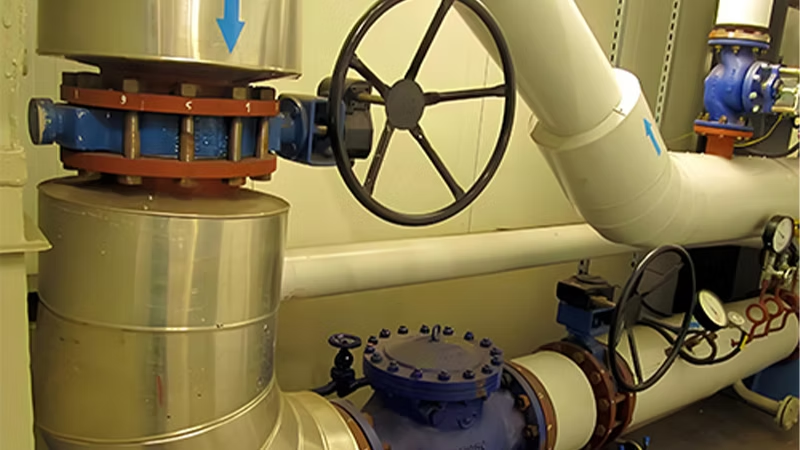
In heating systems, selecting the right valves is critical to ensuring efficiency, temperature control, and system stability. This article provides a brief overview of six common valve types: thermostatic valves (for automatic room temperature regulation), electric valves (for remote control), globe valves (for flow regulation), solenoid valves (for rapid response), three-way valves (for flow balancing), and pneumatic valves (for use in special environments). The characteristics and suitable applications of each valve are outlined to help engineers make optimal selections based on system scale, functional requirements, and user expectations, thereby enhancing energy efficiency and comfort.

Common Types of Valves in Building Plumbing Systems

Common Types of Valves in Building Plumbing Systems

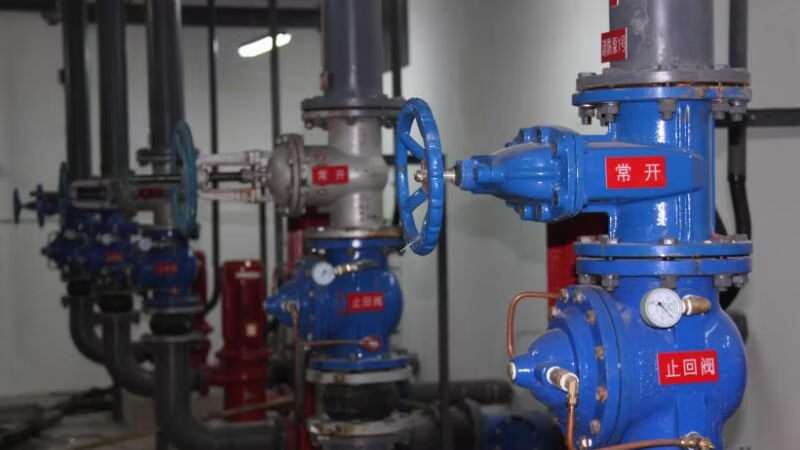
This article introduces six commonly used valves in building water supply systems and their functions: ball valves (easy to operate, quick to open and close, used in hot and cold water pipes), butterfly valves (compact in structure, suitable for high-flow main pipes), globe valves (low fluid resistance, capable of regulating flow), check valves (prevent backflow, protect pumps), control valves (precisely control flow), and pressure-reducing valves (reduce pressure, ensure equipment safety). Engineers must select appropriate valves based on system requirements, operational characteristics, and environmental factors to ensure efficient and stable system operation.

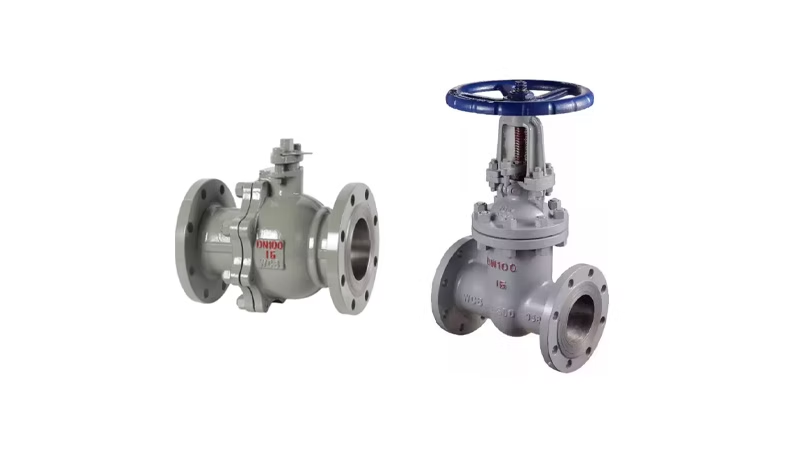
Differences Between Flanged Gate Valve and Flanged Ball Valve

Differences Between Flanged Gate Valve and Flanged Ball Valve

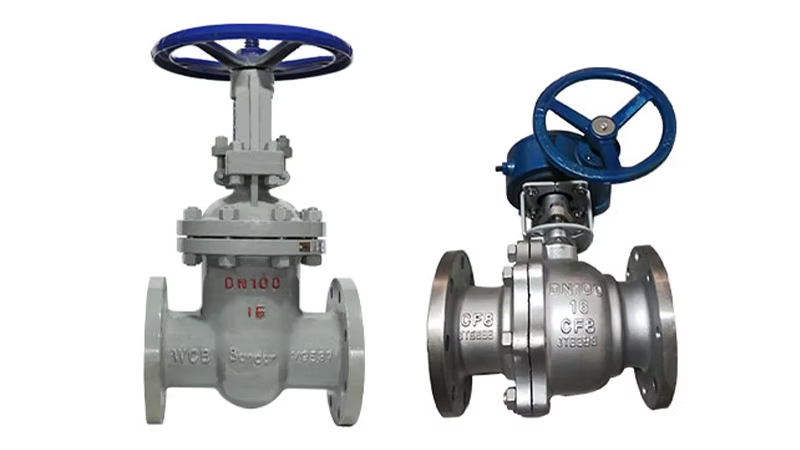
This article analyzes the key differences between flanged gate valves and flanged ball valves: Structurally, gate valves feature a gate that moves up and down (comprising the valve body, bonnet, etc.), while ball valves operate by rotating the ball 90 degrees (comprising the valve body, ball, etc.); In terms of operating principles, gate valves rely on the gate plate sealing against the seat, while ball valves achieve flow by rotating the ball; regarding application scenarios, gate valves are suitable for applications requiring full opening/closing and strict leak prevention (such as water treatment facilities), whereas ball valves are suitable for rapid operation (such as fire protection systems). Selecting the appropriate valve based on actual requirements and fluid characteristics is crucial.

Common Types of Manual Valves

Common Types of Manual Valves

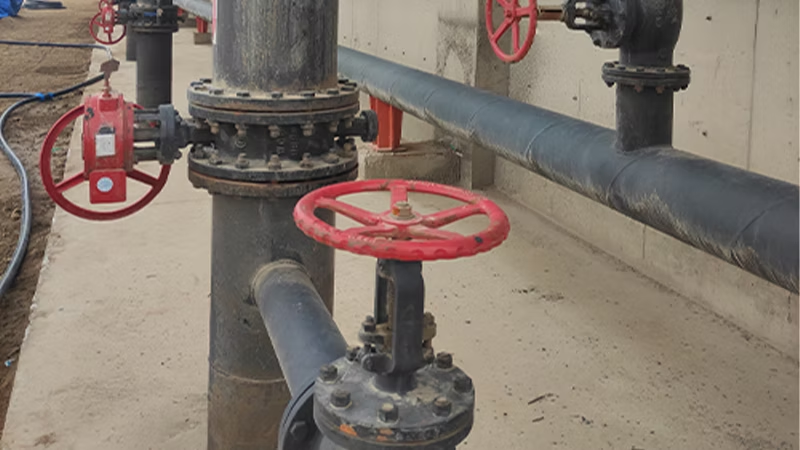
Manual valves are critical control components in pipeline fluid conveyance systems. Widely used in industrial applications, they are designed to ensure smooth fluid flow and safe system operation. This article focuses on four common types: manual butterfly valves (featuring a simple structure and easy operation; available in handle-operated and worm-gear types, suitable for pipes of various diameters), manual gate valves (commonly used in water supply systems; available in exposed-stem and concealed-stem types, with an intuitive indication of open and closed states), manual ball valves (used for shutoff, diversion, and flow regulation, with a spherical operating element), and manual globe valves (offering good wear resistance and easy maintenance, though requiring high torque to open and close, with a nominal diameter ≤200 mm). Selection should be based on pipeline characteristics and operating conditions to ensure efficient and stable system performance.

Analysis of the Suitability of Butterfly Valve as Control Valve

Analysis of the Suitability of Butterfly Valve as Control Valve

This paper evaluates the suitability of butterfly valves as control valves in fluid management within the industrial and building sectors. The advantages of butterfly valves include their simple design, compact size, and light weight, which facilitate installation and maintenance. They also feature low operating torque, fast response times, and low flow resistance, thereby reducing energy consumption and costs. However, they suffer from insufficient control accuracy, non-linear flow characteristic curves, and a tendency to cause flow fluctuations at small opening angles. Additionally, long-term use may lead to seal degradation and leakage. Therefore, butterfly valves are suitable for applications where control accuracy is not critical, flow variations are wide, and cost-effectiveness and convenience are prioritized (such as ventilation or water supply and drainage systems); however, for applications requiring high precision (such as chemical production), ball valves or precision control valves are recommended.

Are Gate Valve Suitable for Steam Pipelines

Are Gate Valve Suitable for Steam Pipelines

In theory, gate valves are suitable for steam pipelines and can effectively block the flow of steam. However, high-temperature and high-pressure environments place extremely high demands on sealing performance, and thermal expansion and contraction can easily lead to leakage risks, resulting in energy waste or safety incidents. Through proper selection (such as choosing cast steel materials), precise installation, and regular maintenance (inspecting and replacing seals), the safe and stable operation of gate valves can be ensured. In summary, gate valves can be used in steam pipelines, but operating conditions, performance, and maintenance must be comprehensively considered to ensure reliable operation.

Applications of Wafer-Type Butterfly Valve

Applications of Wafer-Type Butterfly Valve

Thanks to their compact design, ease of operation, and excellent sealing performance, wafer-type butterfly valves are widely used in piping systems across industries such as oil and gas, chemicals, water treatment, thermal power plants, and sulfuric acid production. Suitable for applications with limited space, they effectively control fluid flow (opening, closing, and throttling), withstand high pressures and temperatures, and resist corrosion, making them a critical component for ensuring the stable operation of industrial processes.

A Comparative Analysis of the Flow Control Performance of Globe Valve and Butterfly Valve

A Comparative Analysis of the Flow Control Performance of Globe Valve and Butterfly Valve

Globe valves offer high-precision flow control and excellent sealing performance, making them suitable for applications requiring precise control (such as chemical production); butterfly valves feature a simple design and low flow resistance, making them more suitable for high-flow systems (such as water supply and drainage). The choice should be based on specific application requirements.

The Importance of Installation Direction and Selection for Flanged Ball Valve

The Importance of Installation Direction and Selection for Flanged Ball Valve

Although flanged ball valves can theoretically be installed in either direction, the actual installation orientation must be carefully determined based on fluid characteristics (such as pressure fluctuations and the presence of impurities) and specific process requirements to ensure valve performance, sealing effectiveness, and the safe and stable operation of the piping system.

Analysis of the Function of Flanged Ball Valve

Analysis of the Function of Flanged Ball Valve

Ball valves are essential components in fluid control systems, offering rapid on/off operation, superior sealing performance, and low fluid resistance. They are suitable for high-flow systems in industries such as chemicals and petroleum, and can precisely regulate flow and pressure to ensure the efficient operation of industrial pipelines.

The Role of Gate Valve in Piping Systems and Differences in Material Applications

The Role of Gate Valve in Piping Systems and Differences in Material Applications

The key difference between cast steel gate valves and cast iron gate valves lies in their material properties and pressure-bearing capacity. Thanks to their high strength and corrosion resistance, cast steel gate valves are the preferred choice for pipelines carrying high-pressure (>1.6 MPa), high-temperature, or corrosive media in industries such as petrochemicals and natural gas. Cast iron gate valves, on the other hand, are widely used in low-pressure (≤1.6 MPa) systems such as water supply and drainage and municipal engineering due to their simple structure and low cost. Valve selection must be based on operating conditions, including pressure, temperature, and medium characteristics, to ensure the safe and stable operation of the pipeline.

A Detailed Description of the Operating Environments and Characteristics of Hard-Seal Butterfly Valve

A Detailed Description of the Operating Environments and Characteristics of Hard-Seal Butterfly Valve

Thanks to their exceptional adaptability, hard-sealed butterfly valves are widely used in a variety of demanding industrial environments. They reliably withstand extreme temperatures (ranging from high-temperature steam at several hundred degrees Celsius to low temperatures in cold regions), accommodate a wide range of pressure levels (from low- and medium-pressure water supply and drainage systems to high-pressure chemical processes), and are compatible with diverse media (including gases, liquids, mildly corrosive solutions, and materials containing solid particles), ensuring the sealing integrity and operational stability of piping systems under all operating conditions.

Key Valves in the Air Conditioning Pump Room: Butterfly Valve

Key Valves in the Air Conditioning Pump Room: Butterfly Valve

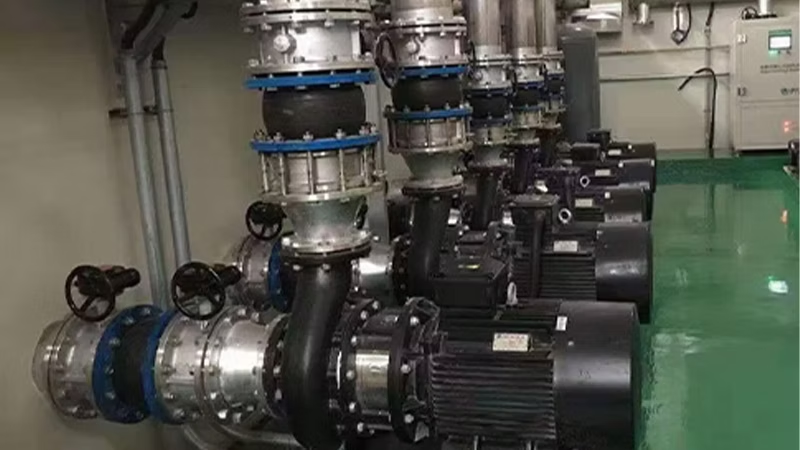
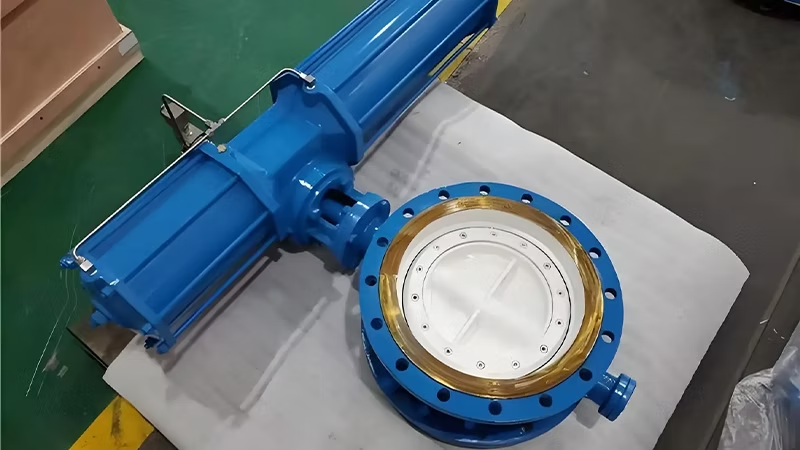
Thanks to their simple design, compact size, and low cost, center-line butterfly valves have become essential valves in air conditioning pump rooms. By rotating the disc, they efficiently control water flow (opening, closing, and regulating) and provide a reliable seal in low-pressure water systems, meeting the space and functional requirements of pump rooms and ensuring stable system operation.

Are Ball Valve Suitable for Sludge Pipelines

Are Ball Valve Suitable for Sludge Pipelines

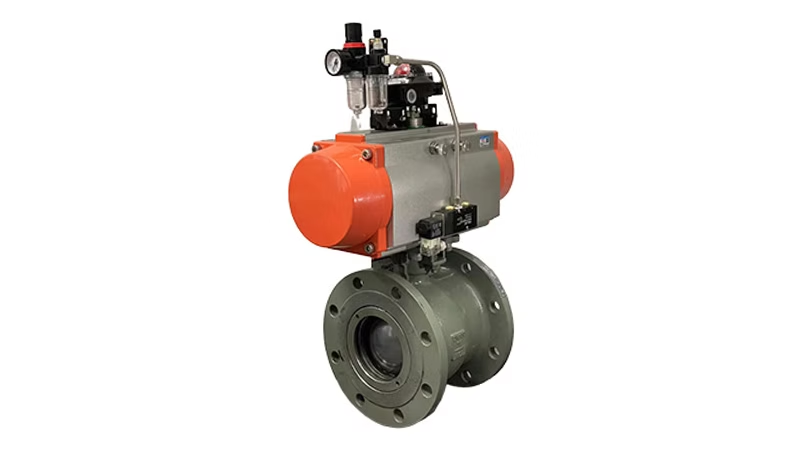
Ball valves can be used in sludge piping systems, but selection must be based on specific operating conditions. Ball valves offer advantages such as compact design, ease of operation, excellent sealing performance, and low maintenance requirements; in particular, electric V-type ball valves are highly effective for sludge flow control (such as precise chemical dosing). When selecting a valve, it is essential to comprehensively consider the temperature, pressure, corrosiveness, and solid particle content of the sludge medium, and choose appropriate materials and configurations (such as hard/soft seals, pneumatic/electric actuation) to ensure smooth process flow, ease of maintenance, and improved production efficiency.

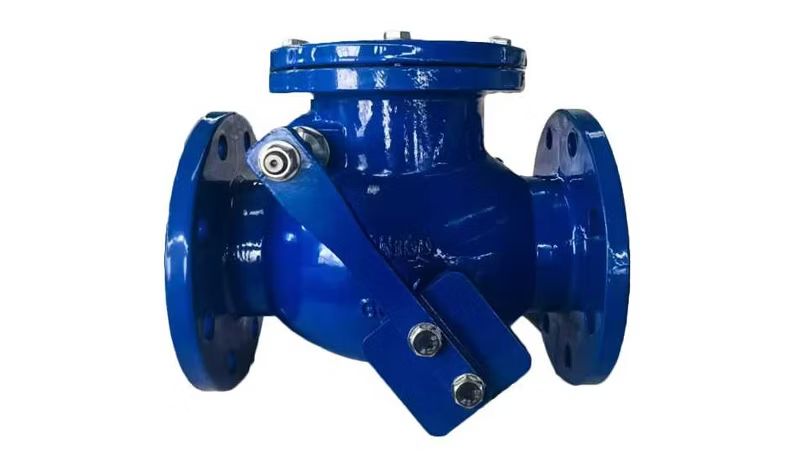
A Detailed Overview of Check Valve Types and Their Applications

A Detailed Overview of Check Valve Types and Their Applications

Check valves are critical components that prevent backflow of fluids, ensuring the stable operation of industrial and residential fluid systems. Major types include swing check valves (single-disc, double-disc, and multi-disc) and globe check valves (vertical and horizontal), which are suitable for various pipe sizes and flow rates. Materials such as cast iron, cast steel, and stainless steel offer a wide range of options to meet requirements for corrosion resistance, pressure, and temperature.

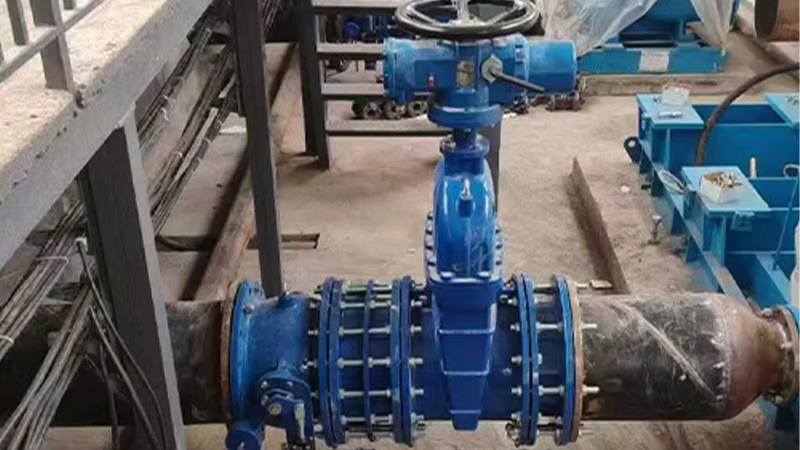
How to Select Gate Valve for Circulating Water Systems

How to Select Gate Valve for Circulating Water Systems

This article provides professional guidance on selecting gate valves for circulating water systems. Wedge-type single-disc gate valves are suitable for conventional industrial systems; they offer good sealing performance but require clean water. Flexible-disc gate valves are suitable for large-scale systems; they provide strong sealing and can withstand fluctuations in pressure and temperature. Concealed-stem gate valves are suitable for small-scale building systems; they feature a compact design and are easy to operate. When making a selection, factors such as system scale, water quality, pressure, and temperature must be considered comprehensively to ensure efficient and stable operation.

Choosing Between Gate Valve and Ball Valve: An Analysis of Pros and Cons

Choosing Between Gate Valve and Ball Valve: An Analysis of Pros and Cons

Gate valves and ball valves each have their own advantages, and the choice depends on specific requirements. Gate valves offer low flow resistance and are easy to maintain, making them suitable for large-diameter, low-resistance pipelines; ball valves feature a compact design, excellent sealing performance, and rapid opening and closing, making them better suited for applications with limited space, high sealing requirements, and the need for quick operation. The key is to make a selection based on a comprehensive evaluation of operating conditions, the medium, and installation requirements.

Selection and Application of Gate Valve, Ball Valve, Globe Valve, and Butterfly Valve: Helping Businesses Boost Production Efficiency

Selection and Application of Gate Valve, Ball Valve, Globe Valve, and Butterfly Valve: Helping Businesses Boost Production Efficiency

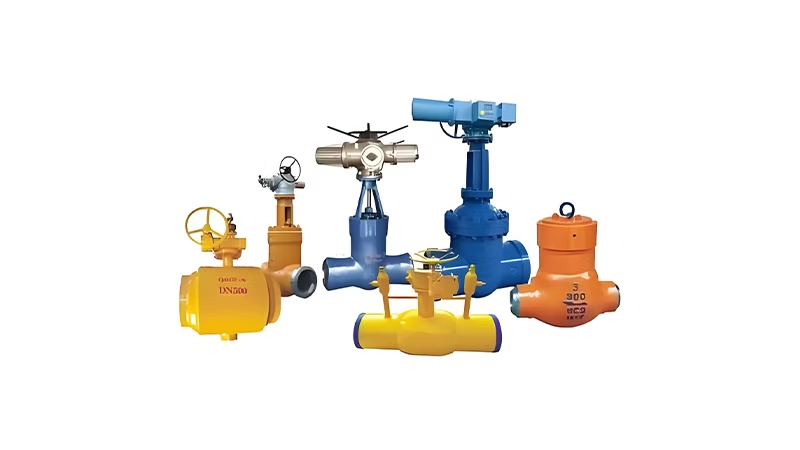
This article provides a detailed overview of the characteristics, advantages, disadvantages, and application scenarios of four common industrial valves: gate valves, ball valves, globe valves, and butterfly valves. It helps businesses make optimal selections based on factors such as fluid properties, operating frequency, and flow control accuracy, thereby improving production efficiency and ensuring the safe and stable operation of piping systems. Each valve type has its own strengths: gate valves are suitable for shutoff control, ball valves offer efficient opening and closing, globe valves provide precise regulation, and butterfly valves are economical and energy-efficient. When selecting a valve, it is essential to comprehensively consider durability, cost-effectiveness, and the requirements of the operating environment.

WhatsApp
WeChat
WeChat
WeChat
Message

Contact us for personalized service!